

When the Australian Community Support Organisation (ACSO) first met Rick*, he was experiencing acute mental health challenges that affected his ability to meet the requirements of his community corrections order. Yet, at the time, suitable mental health and housing services were not equipped to provide the level of support he needed.
Without timely and compassionate intervention, Rick was at high risk of becoming caught in a cycle of homelessness, deteriorating mental health, alcohol and other drug (AOD) use, and periods of incarceration. For anyone working in the criminal justice space, this cycle is well known and deeply concerning.
In response, Rick was referred to ACSO’s Community Advice and Treatment Service (COATS). COATS provides comprehensive assessments to individuals with alcohol and other drug (AOD) concerns, including those subject to court-ordered assessment and treatment, with the aim of diverting them from further involvement in the criminal justice system. The service achieves this by linking individuals to AOD supports that promote safety and wellbeing for both the individual and the wider community.
Through COATS and other programs, ACSO has earned a reputation for successfully supporting clients facing extremely complex challenges, and the department hoped we might be able to help.
Our COATS assessors recognised Rick’s AOD concerns, however they also recognised that his needs went beyond AOD support alone. They could see that referring him to a specialist AOD service would not be enough. Put simply, any single support system (be it health, justice, housing, or disability) would have proved insufficient to support meaningful rehabilitation.
Rick’s needs were highly complex.
What are Complex Needs?
The term Complex Needs (also often referred to as Co-Occurring Needs) describes a situation in which a person is experiencing numerous, inter-related challenges that impact their wellbeing and capacity to participate in community life.
People with complex needs might live with any combination of mental health challenges, AOD use challenges, homelessness, disability, trauma, and contact with the criminal justice system.
One example might be a person with a disability who also experiences mental illness, or a person experiencing homelessness who also lives with a disability and has frequent contact with the criminal justice system. Importantly, these factors aren’t discrete. They often compound one another in ways that make causes and impacts difficult to untangle.
The challenges facing people with complex needs are as various as they are complex, but one thing remains consistent: people with complex needs often require more than one service to meet their needs effectively. Often multiple integrated services are required.
However, many of our support systems in Australia are set up as separate services, with siloed funding and little communication between them. This limits services’ capacity for meaningful collaboration.
The trouble with the ‘siloed’ system
People with complex needs often speak of the burden of navigating multiple services at once, with no provider able to fully meet their needs. We hear this a lot from lived experience advocates who speak of the exhausting process of answering the same questions again and again or being diagnosed repeatedly, only to be referred on to a different provider, where they begin the process all over again.
Doubling up like this can undermine continuity and trust for the individuals involved and represents a waste of scarce resources for services that are already overloaded and underfunded. Due to the absence of communication between services, we lose valuable opportunities for collaboration and fail to engage fully with the inter-related needs a person might present.
The way our systems are siloed leads to all kinds of unintended consequences for people with complex needs. It can often result in barriers to access, poor continuity of care, service gaps, long waiting times, unavailable services, or failure to meet service eligibility requirements. In many cases, people who are highly complex are discharged due to service scope or eligibility constraints, particularly where safety concerns require specialist responses.
Where people have a history of involvement with the justice system, this can further limit their service eligibility and access.
This is not the fault of any specialised service providers. It’s a structural issue. In a fragmented system, more people tend to fall through the gaps.
The view from prison
Due to our forensic focus, ACSO has witnessed these structural failings firsthand.
The forensic cohort has a particularly high representation of people with complex needs. This is because, however unintentionally, prisons have become a default institution for people who other systems struggle to support. If you fall through the gaps, there’s a high probability prison is where you’ll land.
We can measure this fact in the ongoing overrepresentation of certain cohorts in prison. In Australia today, people in prison are:
- 2x more likely to be experiencing a mental health disorder
- 5x more likely to struggle with a substance-use disorder
- 5–10x more likely to have an intellectual disability
- 100x more likely to be experiencing homelessness.
As these statistics stress, the level of complexity among the people in prison is much higher than in the general population. Supporting a person to reintegrate into the community after prison often requires some combination of mental health, housing, AOD, and disability supports. Yet contact with the justice system, and the stigma that follows, can often make it harder for people to access the services they need.
Because of this, ACSO’s forensic focus has led us to develop a detailed understanding of the challenges facing people with complex needs and the way these challenges cut across and between different sectors. This is the reason we have grown to offer supports spanning mental health, disability, AOD, and residential services.
We understand the best chance of success comes from responsive, wrap-around care that addresses a person’s various needs through an integrated approach. We also understand how difficult it is to access or deliver these services from within the current, siloed system.
This brings us back to Rick.
Rick’s success story
Rick had multiple and very complex needs. He required urgent support with mental health, AOD, trauma, and finding accommodation. He had also been in trouble with the law, so he also needed support to ensure he avoided further contact with the justice system.
ACSO believes in giving everyone the support they need to thrive, and that means everyone. The question we had with Rick wasn’t whether we could help him, but how.
Rather than being referred to a specialist AOD service, the decision was to refer Rick to ACSO’s Assertive Outreach and Support Services (AOS).
AOS is an innovative initiative designed to deliver assertive outreach and case management services to people with complex needs. It is unique in its capacity for collaboration and innovation because it is expressly funded to support people who “face major service gaps where current supports fail to meet needs or reduce community risk”.
To support Rick, AOS initiated a responsive, multi-agency collaboration: ACSO, Monash Health, NDIS, and Victorian Department of Families, Fairness & Housing came together to create a person-centred transition plan.
Over the next eight months, our AOS team supported Rick through every step, helping him access the supports he needed, stabilise, build confidence through day release programs, and prepare for re-entry into the community.
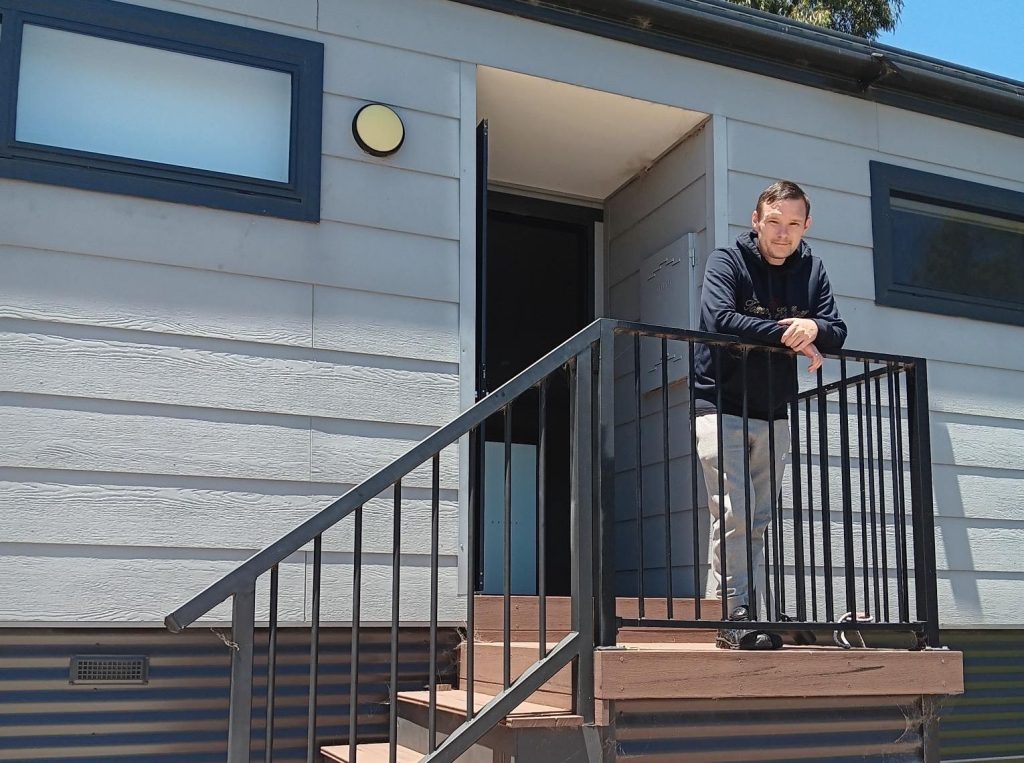
Today, Rick is housed, supported, and doing well. His journey continues, but now it is happening from a place of stability, and the foundations are laid for long-term recovery.
Shifting the paradigm
If Rick’s story teaches us anything, it’s that with the right funding and support models even the most complex needs can be met.
Unfortunately, this kind of collaborative, wrap-around support remains the exception. In many cases, people like Rick fall through service gaps and become caught in cycles of incarceration, homelessness and mental illness.
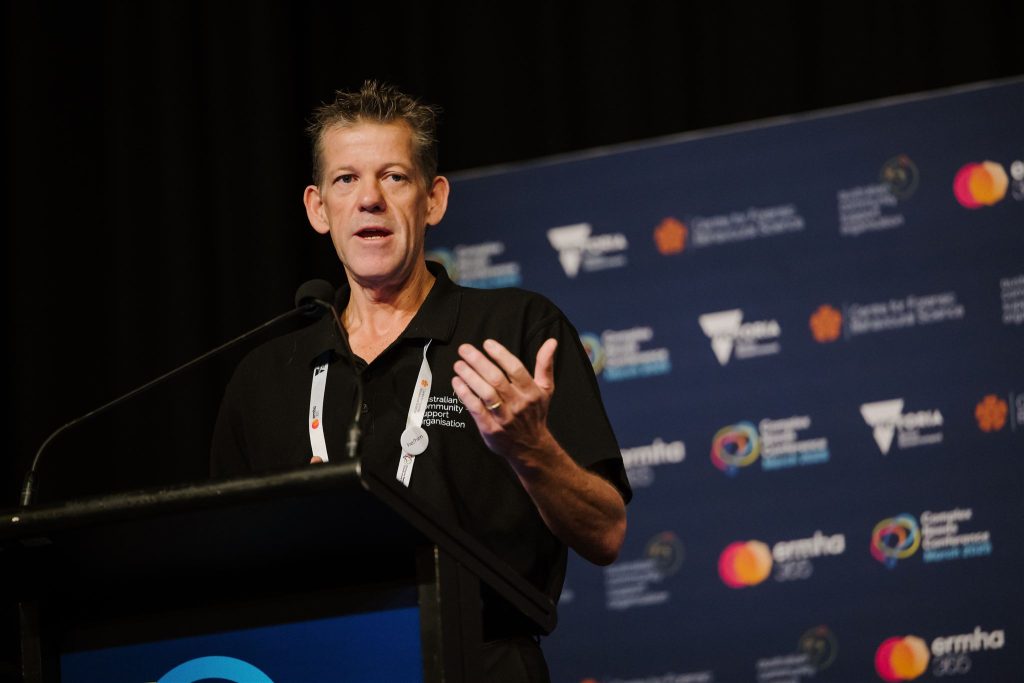
ACSO is working hard toward changing this. In March 2025, we hosted the Complex Needs Conference alongside Ermha365, with funding from DFFH and with support from Swinburne University of Technology. This conference brought together experts from across mental health, disability, AOD, residential, and other support service areas to discuss some of the most pressing questions raised in this article: How can we ensure our support systems serve those who are most in need of support? What barriers are getting in the way? How can we better collaborate to bridge gaps and integrate supports?
The knowledge and experience in the room was incredibly diverse, yet there was at least one thing we could all agree on: the time has come to shift the paradigm on how we support people with complex needs.
The Complex Needs Conference will be running again in 2026 at the Melbourne Convention and Exhibition Centre, with dates confirmed for Wednesday 30 – Friday 2 October 2026. If you would like to get involved, you can click the link below for more information. We embrace this opportunity to advance an integral cross-sector conversation, and we hope our leadership in this space can result in better outcomes for people with complex needs.